How do you realize and measure business value with AI?
Many organizations are now deploying generative AI, Microsoft 365 Copilot, and AI agents. The next step is to make these technologies actually work for the organization. This revolves around the question of what concrete results AI delivers and how you make that business value visible.
The short answer: AI only delivers value when it improves a concrete process, not when it is widely used. Start with a recognizable organizational problem, determine in advance what result needs to improve and only scale up what demonstrably works. Microsoft's own 2026 Work Trend Index confirms that pattern: while the use of agents within Microsoft 365 is growing rapidly, only a third of organizations indicate that this actually leads to lasting impact. So use and result are two different things.
Start with the problem, not the technology
Where do employees lose time? What information is difficult to find? Where do manual steps cause errors or delays? From that practice, it becomes clear where AI can make a difference. Only then does it make sense to look at a tool.
Those who determine in advance which result should improve can also demonstrate this later. Think of shorter lead times, fewer recurring questions, or more room for work in which human expertise is still needed. Record what the current situation is and how you will assess the effect.
NOC*NSF
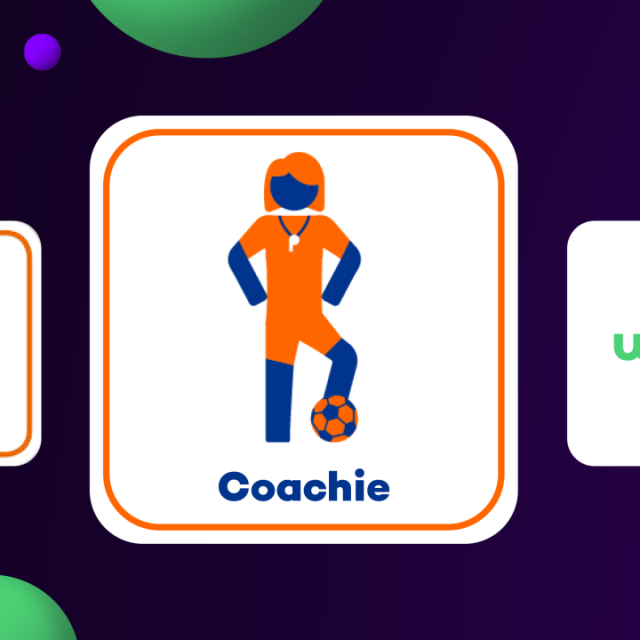
NOC*NSF shows what that looks like in practice. The HR department kept getting the same questions from employees. Together with Wortell, the organization developed Coachie, an agent that answers questions based on the internal HR knowledge base.
In the first weeks, Coachie answered more than a hundred questions. Employees find information faster, and HR has more time for more complex issues and personal contact. The value was not in AI as an end in itself, but in a process that became noticeably better.
This is also the starting point for other organizations: choose a process with recognizable friction and measure the effect in practice. As Femke Cornelissen, Chief Transformation Officer at Wortell, writes in AI really scaling up as a retailer? Get these 4 challenges out of the way, scalable AI value is not created by adding individual features, but by conscious choices about process, people and tasks.
NOC*NSF
Adoption and governance determine whether it will continue to work
A technically sound application is not automatically successful. Employees need to understand when AI is suitable and when a self-assessment will continue to be necessary. Managers play an important role in connecting AI initiatives to organizational goals and clearly assigning responsibilities.
That weighs more heavily than often thought. The same Work Trend Index shows that organizational factors (culture, management support, skills) have more than twice as much influence on the bottom line as how individual employees use AI. Whether AI delivers value is therefore mainly determined at the organizational level.
This is extra visible in Microsoft 365: Copilot and agents work with information that employees already have access to, so that existing agreements about rights and ownership matter directly. Jesse van der Zwet, Product Owner AI Agent Governance at Wortell, writes in The blind spot in your Power Platform: everyone builds, but who manages? that governance needs to look beyond just agents. Underlying apps, flows and data must also remain manageable.
Scale only on what already works
The greatest value is not created by building as many new applications as possible, but by scaling up a few successful initiatives in a targeted manner. That is exactly the point Femke Cornelissen makes about scalable AI value: conscious choices, not separate features.
Microsoft calls employees who are at the forefront of this "Frontier Professionals": a relatively small group of 16% of AI users, according to the same Work Trend Index, which consciously redesigns how work is distributed between people and agents and captures what works instead of experimenting over and over again. This only works if the governance that Jesse van der Zwet describes around data, rights and management is already in place before you scale up.
Four questions help to make that distinction: which organizational goal supports this application, which process demonstrably improves, do employees use the application in a way that adds value, and are data, access and management appropriately designed?
Frequently asked questions about AI and business value
How do you realize and measure business value with AI?
By choosing a process and a measurable result in advance, for example shorter lead times or fewer recurring questions, and measuring that. Purely following the use of a tool says little about that.
Why do many organizations fail to move from an AI pilot to company-wide value?
Most of the time, the problem is not in the technology, but in the organization around it: culture, management support and skills determine more than twice as much of the outcome as individual AI use, according to Microsoft's own research.
How do you scale up a successful AI application responsibly?
By first proving that one application works, only then broadening, and setting up governance around data, rights and management in advance instead of afterwards.